Thursday, 29 December 2016

Gender in the Media

Gender in the Media

-Gender is the range of characteristics that distinguish between males and female.
-Essentially what it means to be a boy or a girl in society.
-This includes the roles and norms that society associates with a particular gender.
-Gender roles are an area of negotiation and conflict and alter over time.

Gender representation in TV drama:
Areas that will be addressed by the 4 technical areas within this extract are-
-Roles- within their work
-Status- who has the higher status in the programme
-Power and logic- who uses power, who uses their logic
-Appearance- as a symbol of sexuality, metro-sexuality and counter stereotype.
-Physicality and Strength
-Stereotypical and counter stereotypical characters.

Examples of TV dramas-
-Downtown abby 
-Our girl
-Orange is the new black

Dominant ideologies-
The ideas that are excepted by societies as the rules/ideas that are widely accepted by society e.g. us as the norms of society.

Binary Opposition-
In order to show one thing you need to show the opposite e.g. you cant see a hero unless you see the villain

Otherness-
Is about labelling people as different or alternative to dominant ideologies e.g. the other is about being different.

Representations of Women:
-Beauty or desirability
-Size/physique
-Emotional issues
-Relationships

-Work

Opening Squences


Different types of opening sequences:

  • title-reveal the name of the film
  • actors names
  • Introduction to a character- reveal who the hero/villain are
  • introduce setting/ establish the location.
  • reveal elements of the genre/narratives and plot 
  • reveal an understanding of the tone/atmosphere of the film
  • narrative information

The discrete title sequence-
Is like a mini film before the film and helps to get the audience into the mood of the film but not tell you what the film is about. It can give you an idea of the tone and the genre of the movie. A discrete opening sequence also is often animated and includes a lot of editing work.

example of an opening sequence:
‘the girl with the dragon tattoo’
  • dark colour scheme, preponderance of black white and grey- signifies its a dark film
  • graphics
  • action thriller
  • death
  • snippets of the narratives being subtly shown 
  • some form of romance 
  • fire
  • black representing the tattoo ink
  • keyboard representing detectives and hacking
Traditional opening sequence:
Although traditional film is slightly stylised, you see the title of the film, font introducing the actors that will reflect the genre and the sound will create a mood, that helps to reveal narrative information.

example of an opening sequence:
‘drive’
  • follows a character 
  • shows you the actor, the credits and location
  • title of the film
  • reveals genre and narrative of the film

Straight into the film:
A film that goes straight into the story and doesn't have an extra title sequence. This type of sequence is far less commonplace and is more likely to be seen in action or horror. There are no titles, no introduction to characters, and the film starts directly with the action of the opening sequence. Used in horror a lot to scare us.


example of an opening sequence:
‘mesrine’
  • sets tone
  • introduces characters

Stylised film:
a stylised title sequence is a combination of straight into it and discrete. The opening of the film starts straight into the action and then followed by a ‘discrete’ title sequence. This type of opening is often used in stylish action films.

How is Regional Identity presented in the opening sequence Doc Martin?

How is Regional Identity presented in the opening sequence Doc Martin?

In the opening sequence of the TV drama Doc Martin, mise-en-scene is presented throughout. Firstly we are introduced to the stereotypical large Cornish plumber, who is working on a tap in the doctors surgery. This plumber is very slow at his job and very relaxed, this is a representation of how everything is much slower in the part of England. In contrast to this plumber, we are introduced to the doctor who had just moved here from London. This doctor is shown to be getting very stressed at times, and getting very frustrated with how slow the plumber is working; This is because in London everything is much quicker and jobs happen faster than in this rural part of England. Therefore, this Doctor is represented to be the binary opposition, moving from a fast paced city to a slow paced village. The setting of this village is in Devon, it has a very old fashioned style with the small cottages and cobbled streets, and everyone has a typical Cornish attitude of being very laid back and relaxed. We can also learn that this village has a very low crime rate, almost non-existent, due to the police officer who spends his time hoovering in a small office which is the village police station. In this small  village, we can see how everyone knows everyone ad everything; for example when the older woman stops the Doctor in the middle of the street in quite an unprecedented manner, just to ask for her prescription of her HRT. This alone tells us that there is an ageing community, and this is a typical representation of the regional identity. Later on we are taken back to the doctors surgery, where we see the plumber sitting down, taking his time on the job, this again representing the slowness of the area and region. We can also see the regional identity in mise-en-scene by the part of the scene where a stray dog runs into the surgery. The doctor then takes the dog out f the surgery, using his scarf, this indicates to us that the doctor doesn’t have a pet because he is used to his city life and hasn't quite adapted to this rural life in a small village. These are some ways that regional identity is presented in the opening sequence through mise-en-scene.

Regional Identity is also presented in the opening sequence through the camera techniques. One way this is done is through the medium close up of the large plumber, who is sitting down, showing even where there is a water leak, he doesn’t move quickly and instead just chats about other less relevant topics. We can also see a close up of the doctor getting very angry and annoyed at the girl employee. This is because whilst havoc is breaking out in the surgery with a leak and a dog running around, the girl is gossiping about her ex boyfriend. This close up shows how the doctor is getting very short tempered with her because he isn't used to this messing around in the workplace, he is used to fast workers and it is a shock to the system to fin out that they are all very slow in this village. This shows again how the regional identity of the village is very slow paced. We later see a wide shot of the village. This shows us the setting of the small pastel coloured cottages, cobbled streets and small market stands. This wide shot shows its rural location of a bucolic landscape, with all the mountains and fields in the background. Finally we see a tracking shot of the doctor whilst walking around the village on his first day, and you see how everyone already knows who he is because in small villages like this, word travels fast. This shows how regional identity is represented through the use of the camera.

The use of sound is also used in the opening sequence to present regional identity. At first we hear the diegetic dialogue spoken by the doctor of ‘treat yourself to a noun’, insinuating that the doctor thinks they are stupid because they are messing around in an office when he’s not used to that in the city. Also through the use of diegetic dialogue, we can learn how the doctor is getting very angry and the policeman in a short conversation because he feels that unlike in London, nobody is doing their job. This is where regional identity is introduced because the doctor can see a difference between these two locations because of how slow paced and played back they are in the village. We can also learn that through the use of synchronous dietetic sounds of the birds, we are in a small, rural, mountainous location unlike the big city of London.

Editing techniques are also used in the opening sequence to present regional identity. One main feature is the slow pace editing, this highlights that nothing much happens in this small village, this is reinforced through the use of sound techniques. However, in contrast of this, there are the occasional quick cuts that portray the doctor getting very angry about the leak and lack of organisation in his office and surgery. Also, the shot reverse shot shows us the small tiff between the girl employee and the doctor of how he doesn’t like all the small town gossip that goes on. This technique is used again when we are introduced to the police officer and how he already knows who the doctor is because of this small town gossip. This outlines the regional identity in the opening sequence and how the sow paced scenes with lack of cuts show a slow region, and this therefore represents the slow pace of their lives.


Overall, Regional identity is presented through the use of mise-en-scene, camera techniques, sound techniques and editing techniques. We can see how the main theme of this programme gets at the slow pace of life which is reinforced in all of these areas.

How is disability represented in the opening sequence of coming down the mountain?

How is disability represented in the opening sequence of coming down the mountain?

In the opening sequence of coming down the mountain, disability is presented through the use of mise-en-scene. We are firstly introduced to the character Ben, he is the disabled brother who is shown tho be very innocent. However, he is also represented to be a burden on everyone else. he relies on his brother and parents for pretty much everything, we see how vulnerable he actually is which makes his representation even more realistic. Then we are introduced to the character David, he is shown to be the abled brother, who on the outside is shown to act like he doesn’t really care much about his brothers disability, however on the inside we can all see that he does care for his brother. David is shown to be a stereotypical teenager in the sense he put his popularity status over his brothers needs, so he ditched his brother to go to a party. He is shown to always be getting annoyed, aggravated and frustrated with his brother  and is very impatient with him. Then we are introduced to their parents. We can learn how they care more for Ben than they do for David. They make David to be like a second career to Ben outside the house. They are shown to be realistic yet stereotypical parents in the sense that they appear to take favour on the more vulnerable, innocent child, Ben. In the first scene, we are immediately shown tat David and Ben share a bedroom, this could be a reason why David gets annoyed at Ben very quickly because he never leaves his side. At the breakfast table, we can see that Ben and his parents are on one side of the table and David on the other. This represents how the parents demonstrate favouritism. We ca also see how Ben is always standing behind David, again representing how he is a burden. These are some ways of how disability is presented through mise-en-scene.

Through the use of the camera techniques, we are shown how disability is also presented in the opening sequence. In the first moments of the film, a birdseye view shot is used, looking down on David and Ben’s room. We can see how their room is divided in half down the middle, with Ben’s side being bright and messy, and Davis’s side being dark and simplistic. Showing how childlike and  immature Ben is compared to David. At breakfast the use of a close up shot presents Davids scorn and anger towards Ben and his reaction to being asked to look after him. Also at breakfast, we see a close up of Ben stealing a sausage from his fathers plate, and how he gets away with it, whereas David gets shouted at for asking for the cereal box, this could again show how their parents favour their disabled child. The use of low angle shots gives the father power as he orders David to help Ben in the bathroom, just like a career would. Through the use of a high angle shot, we can see the difference between the abled and disabled child of Ben eating ice cream like a small child, and David high up in a tree acting like the adult. This shows us how disability is presented through the use of camera techniques.

Disability is also presented in the opening sequence through the use of editing techniques. The use of eye line match at the very beginning of the scene shows Ben fast asleep in a very slobbery manner and David wide awake before the alarm. This shows the binary position between the abled and mature with the innocent and disabled. Through the short, bread montage of the evolution of time, we can learn that David is trying to understand Ben’s disability.  Also through the use of quick cuts, we are shown how Ben is centre of attention in their family and that actually David could be the one seen as a burden because his parents favour Ben because of his needs. The use of a montage is used again, showing Ben and Davids every day routine before school, and how Ben would be lost without David because he protects him from stranger and anything unknown. This shows us how the use of editing is a key feature in presenting the theme of disability.

Sound techniques are also used in the opening sequence of ‘coming round the mountain’ to present disability. The use of non dietetic songs with lyrics that say ‘wouldn’t it be nice if we were older’ signify that David wants to move out in order to gain more freedom so that he no longer has to be Ben’s career. This non dietetic sound is supposed to echo David’s thoughts. Also, the diegetic dialogue tells us that Ben wants to go on the same holiday every year because he likes the ice cream and is a creature of habit. Also, this shows us that because Ben is the favoured brother because of his disability, he gets to choose where the family holiday each year. Towards the end of the scene at school, the diegetic dialogue between Ben an David tell us that David is bribing Ben to home on his own so that David can go to a party, however the non diegetic voiceover tells us that Ben and David have never been more than a quarter of a mile apart, and that this was the first time David had ditched Ben. This is one way how disability is presented through the use of sound techniques.


To conclude, Disability is presented through the use of mise-en-scene, camera techniques, sound techniques and editing techniques. From analysing the opening sequence we have learnt how Ben is treated far better than David, but is also actually a burden on their family and David in particular.

Monday, 7 November 2016

My Sweeded Film


Sweeded Film: Titanic

A sweded film is a film which is summarised in a few scenes, made on a limited budget or none at all, with no props and shot on a regular camera (even a phone). Upon completion the film would have been sweeded. We decided to chose the film Titanic to adapt, this is because it is a very well known film and can be easily understood with no props or suitable scenery. We selected 5 important scenes that we summarised, and combined them together then added the correct music.

Sweeded film example:


Analysis of our sweded film:

Our sweded film is made up of five different scenes. The first scene out of the five is the poker scene, it is the scene when Jack wins two tickets to go aboard the Titanic ship. We decided to chose this scene because it is the scene that starts their journey on the ship. The second scene we chose to film is the scene where we see Jack and Rose meet for the first time on the ship. We chose this scene because it is a large indicator of the main focus of the film. After this scene, we chose one of the most significant scenes in the movie, the scene by which Rose and Jack are standing on the tip of the ship. This scene was chosen because it represents the Titanic movie, it is also the face of many film posters and is featured in most of the trailers that advertise the film. The fourth scene that we filmed was the scene where Jack and Rose are being separated due to the boat sinking. This scene is significant because it demonstrates the love between the two characters, it is also signifiant because it takes place during the main point and focus of the film, the sinking of the ship. The last scene that we filmed for our sweded film was the scene where Rose tells her grandchild about her experience on the ship, and her history with Jack. We chose for this to be our last scene because it sums up what happened in the film, it is also one of the last scenes in the original film and therefore we chose to close our film with a similar ending. Overall i think that our sweded film sums up the original film by using short, significant scenes with little props to demonstrate what the film is about.

Conventions of a Thriller

Sub genres of a thriller

Sub genres of a thriller:
-Action Thriller
A film where there is a focus on the action, it is more common in movies than novels due to the visual appeal of expolisions and violence. They deal with semi-realistic storylines, and the majority contain terroists, crime fighitng etc.
e.g. Jason Bourne/ the Bourne series 
-Crime Thriller
This subgenre focuses on crime.
 e.g. Sherlock Holmes
-Disaster Thriller
In this subgenre usually a natural disaster takes place, then the anatgonist is trying to stop the disater and save the world or, just save theirselves or even loved ones.
e.g. 2012
-Medical Thriller
This subgenre is usually used for medical purposes, a typical plot is hwere a deadly virus is leaked to the public and the antagonist is trying to save the human race from this tragdey.
e.g. Contagion
-Legal Thriller
These films usually involve the protagonist, being the lawyers, who has to fight a case that threatnes their client. The film will surround a court case being fought in and outside of the courtroom.
e.g. Erin Brockovich
-Mystery Thriller
These films are both mysteries and thrilers. These films are described to be quite ‘fast-paced’, with the protagonist trying to prevent another serious crime with no legal help.
e.g. Sixth Sense
-Religious Thriller
This subgenre mixes the myths of religion and history into an action packed mystery. There are historical or religous object involved, with differet groups of people after these objects.
e.g. Davinci Code
-Romantic Thriller
These films mix love and thrilling storylines, ther majority were once novels made into films. The plot follows a relationship between two lovers, with tension and secrets.
e.g. Red Riding hood
-Spy Thriller 
This subgenre focuses on adventures of field agents or ex-agents. They invlove the villain/villains in an organsed group, witht the agent being the protagonist who is helped by an agency. 
e.g. James Bond
-Supernatural Thriller
In these films, there are normally inhuman elements that are introduced. The characters have supernatural abilities or is set in a supernatural background. The antagonists usually try to help these inhuman people.

e.g.The X Files

Editing Techniques

Editing Techniques:

Jump cut-  
A 30 degree jump in the action that moves a scene forward by a split second, this helps the conversation to flow or make the action move forward.

Slow motion or montage- 
A series of shots used to condense time, can be used well with sound (usually music), can sometimes add comedy to a scene.

Split screen- 
Can show two things going on at the same times in different locations, it also shows different perspectives and tell us that the two scenes are connected.

Wipe, fade, dissolve- 
All transitions that link one scene to another.

Still/freeze frame- 
Used to show characters facial expressions and motivations alongisde a non-diegtic voice over, also used to demonstrate the significance of particular moments or scenes.

Rhythmic editing- 
Used to cut something in time with the music e.g. action films, the faster the music, the faster the cuts.

Quick cuts- 
Used to speed up the action.

Shot reserve shot- 
Used to show a conversation by cutting between characters.

Cutting on action/ match on action- 
A quick cut that shows movement, allowing a scene to progress e.g. catching something, running, or opening a door.

Cut away/ the Kuleshov effect- 
When you take away the middle shot and replace it with a different shot, this changes the meaning.

Flash back- 
Used to show the past or a characters motivations.

Match cut- 
Used to cut from one scene to another through matching the action, used as scene transitions.

Sound bridge- 
A piece of sound that links two scenes together, one way doing this is by hearing the sound before you see whats happening in the next scene.

Pace- 
A film can be a fast pace or a slow pace, it could be used to build suspense (slow), slow pace films focus on dialogue. Fast pace films (action).

Camera time- 

The amount of time the camera spends on a particular character to show their importance.

Camera Techniques


Camera Techniques

Wide shot - 
This shot is one by which the subject takes up the majority of the frame. It also shows the subject’s surroundings.

Close up-
In the close up shot, a certain feature or part of the subject takes up most of the frame. It is most commonly used to show detail and emphasise the characters facial expression.

Medium close up-
A shot that shows the face and shoulders. It is halfway between a mid shot and a close up.

Over the shoulder shot- 
This shot is done from behind the shoulder of the person looking at the subject. This is used to indicate the position of each person.

Point-of-view shot- 
This camera technique shows a view from the subject’s perspective. The subject whose point of view it is is usually made obvious.

Tracking shot- 
This type of shot is commonly used to make it seem like the subject is being followed. It can be done in several ways; most commonly a camera is mounted onto cart, which travels along tracks.

Tilt-  
This is a vertical camera movement in which the camera points up or down from a still position. It is often used to give a character more power than another.

Pan- 
The panning camera technique is popular within filmmaking. It is a swivelng camera movement done by moving the camera from left to right, usually on a tripod in a fixed location. Similarly to a tracking shot, a pan is most commonly used to track the subject’s movement.

Three point lighting

Three Point Lighting Adds Dimension :
The goal of 3 point lighting is to create the illusion a three-dimensioned subject in a two-dimensional image.
While you can create dimensions in a number of different ways, there's no doubt that using light and shadow can create a powerful affect, and helps accomplish 3 point lighting.

Types of lighting-
The Key Light: This is the main light used in a film 


The Fill Light: The purpose of this light is to fill in the shadows by the key light. preventing them from getting too dark.


The Black Light: This is used to separate the subject from the background.


Scrims are designed to reduce the light without softening it, natural density gels can be used to do this.


Introduction to Cameras and Filming

Rule of Thirds

'High Heels' Poster analysis

'Sherlock Holmes' Poster analysis

'Children of Men' Poster analysis

Monday, 31 October 2016

Sound Techniques

Sound Techniques:

  • Diegetic- Sound that is in the scene that the actors can hear.
  • Non-Diegetic- Sound that the actors can’t hear which is editied into the scene later.
  • Synchronous- Sound that matches the action that is added in aftwewards as a sound effect.
  • Asynchronous- Sounds that don’t match the scene e.g. voiceovers that reveal flashback information.
  • Contrapuntal-Sounds thst contrast with the action e.g. scene of extreme violence that juxtaposes with the music, makes the scene less violent.

180 Degree Rule

Wednesday, 21 September 2016

About Me

My name is Aerin Rosenfeld, I am studying media studies at JFS. I chose to study this subject because I have an keen interest and passion for this subject, and I believe that this would give me some key knowledge and understanding about the new growing world of technology. Once I leave school I would like to further my education in the marketing sector, and learning about media studies at A level will give me the basic understanding that I need.

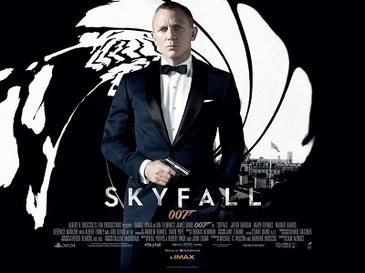
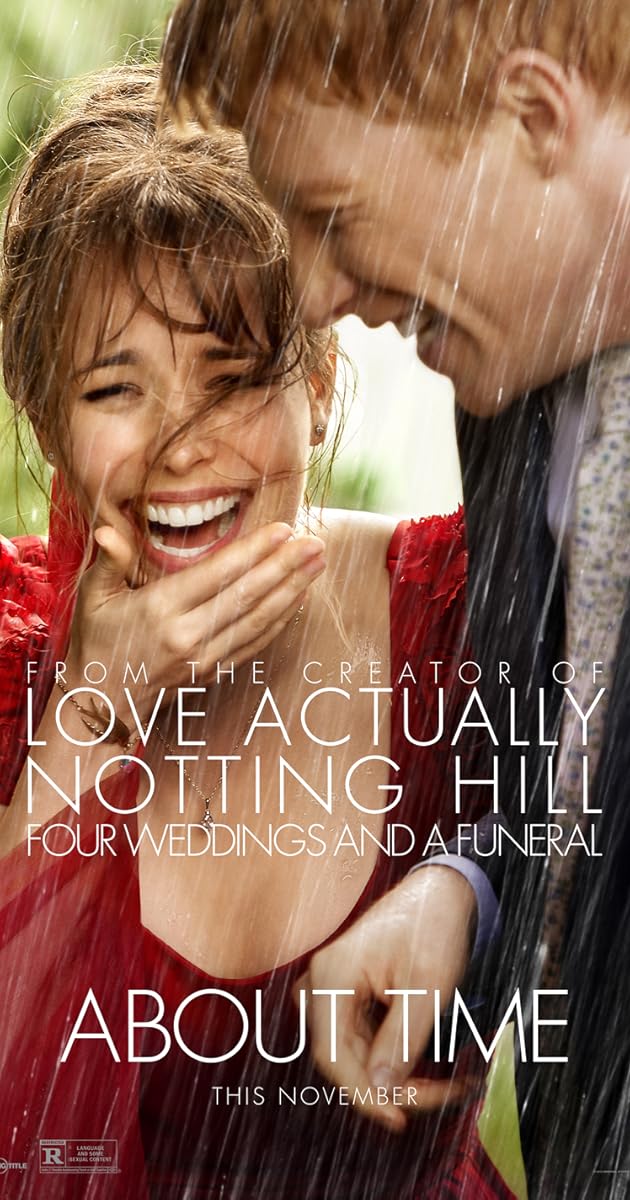
I love watching film's and TV in my spare time. My favourite film genre is Action/Thriller as I find these the most engaging and these films always leave me captivated and on the edge of my seat. I enjoy watching all the graphic designs and special effects that take place throughout these films. My favourite action/thriller movie has to be James Bond, Skyfall. I also thoroughly enjoy watching Romantic Comedies as they capture all my emotions from laughing to crying and always have such great endings that always make me cheerful.


Image result for skyfall
 Image result for about time